Amazon Vine Program: What It Is and Should You Use It in 2026?
- The Amazon Vine program lets brand-registered sellers submit products to vetted reviewers who receive them for free in exchange for honest reviews.
- Enrollment costs $200 per parent ASIN (free for ASINs with 0 existing reviews as of 2023).
- You can receive up to 30 Vine reviews per ASIN, though most enrollments generate 10 to 20 reviews.
- Vine works best for products with fewer than 30 reviews that already have a solid listing and competitive price.
- Whether Vine is worth it depends on your product cost, margin, and how critical early social proof is to your launch.
If you have ever launched a product on Amazon, you know that the first 30 days are make or break. No reviews means low conversion rates. Low conversion rates mean poor organic rank. And poor organic rank means you are paying for every single click with PPC.
The Amazon Vine program promises a shortcut: submit your product, and Amazon’s most trusted reviewers will post honest feedback within weeks. But there is a $200 fee per ASIN attached, the reviews are never guaranteed to be positive, and not every product type benefits equally.
This guide breaks down exactly how the Vine program works, who it is right for, what it costs in real terms, and how to decide whether enrolling makes sense for your next launch.
What Is the Amazon Vine Program?
Amazon Vine is an invitation-only reviewer program launched by Amazon in 2007. It gives sellers and vendors a channel to collect unbiased product reviews from a curated pool of high-quality reviewers, known as Vine Voices.
Vine Voices are selected by Amazon based on the helpfulness of their previous reviews, their review volume, and their pattern of accurate, detailed feedback. Reviewers do not apply; Amazon invites them. They receive products at no cost and are required to leave an honest review, though that review can be positive, negative, or neutral.
Critically, Vine reviews carry a “Vine Customer Review of Free Product” badge visible to all shoppers. This transparency is built into the program by design, and Amazon views it as fully compliant with its review policy, unlike incentivized reviews, which are banned on the platform.
For third-party sellers, the program became available through Seller Central in 2019 and has since been one of the most legitimate, scalable ways to generate early social proof on a new listing.
How Does Amazon Vine Work?
The mechanics of the program are straightforward. Once you enroll an ASIN, Amazon makes units of your product available to Vine Voices in your product’s category. Reviewers browse available products, claim units that interest them, and Amazon ships the items directly from your FBA inventory.
After receiving the product, Vine Voices have a set window (typically around 30 days) to submit their review. Amazon monitors compliance. Reviewers who consistently fail to review claimed products can lose their Vine Voice status.
Reviews go live on your listing just like any other customer review. They appear in the reviews section, marked with the Vine badge, and they count toward your star rating average. You cannot edit, respond to, or remove a Vine review any more than you can any other customer review.
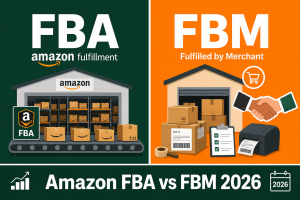
One important operational note: Amazon fulfills enrolled units from your existing FBA inventory. This means you need to have stock in an FBA warehouse before enrolling. If you are launching with a Seller Fulfilled Prime or FBM setup, Vine enrollment is not currently available.
Amazon Vine Enrollment Requirements
To enroll an ASIN in the Amazon Vine program, you must meet the following criteria:
- Brand Registry: Your brand must be enrolled in Amazon Brand Registry. This is a hard requirement with no exceptions.
- FBA fulfillment: The ASIN must be fulfilled by Amazon (FBA). Merchant-fulfilled or FBM listings are not eligible.
- Fewer than 30 existing reviews: ASINs with 30 or more customer reviews are not eligible for enrollment. The program is specifically designed for products in their early review-building phase.
- Active listing in a non-adult, non-restricted category: Vine does not support adult products, hazardous materials, or certain restricted categories. Most standard consumer product categories qualify.
- Available FBA inventory: You must have units in stock at a US fulfillment center at the time of enrollment. Amazon recommends having at least 30 units available to fulfill reviewer requests.
Once these conditions are met, you can enroll directly through Seller Central under the Advertising menu. The enrollment process takes a few minutes and Amazon typically activates your ASIN in the Vine system within 24 to 72 hours.
If you want a deeper look at how a well-optimized listing supports review conversion, our Amazon listing optimization service covers the full picture.
Amazon Vine Cost Breakdown
The Amazon Vine program has a tiered pricing structure based on the number of reviews you want to collect. Here is the current fee schedule as of 2026:
| Units Enrolled | Vine Fee | Cost Per Review (assuming full uptake) |
|---|---|---|
| 1 to 2 units | $0 | $0 |
| 3 to 10 units | $75 | $7.50 to $25 |
| 11 to 30 units | $200 | $6.67 to $18.18 |
The most commonly referenced figure is the $200 fee for up to 30 units. That number is accurate for the standard full enrollment. However, note that there is also the cost of the product units themselves. If you enroll 30 units and your product costs $15 landed (manufacturing plus FBA fees), you are giving up roughly $450 in inventory in addition to the $200 program fee, for a total commitment of around $650.
There is also the FBA storage dimension to account for. Units enrolled in Vine sit in fulfillment centers while Vine Voices claim them over a period of several weeks. You will incur standard FBA storage fees on those units during the enrollment window, though this is typically a minor cost compared to the program fee and product cost.
No sales tax is charged on the Vine program fee. The $200 is a flat advertising/service fee billed through your Seller Central account.
Vine Timeline: How Long Does It Take?
Understanding the timeline helps you plan your launch sequence correctly. Here is a realistic breakdown:
- Enrollment approval: 24 to 72 hours after submission.
- Units available to Vine Voices: Immediately after approval. Reviewers can begin claiming units the same day.
- First reviews posted: Typically within 1 to 3 weeks of enrollment. Some reviewers post very quickly; others take up to 30 days.
- Full review cycle: Most Vine reviews for a given ASIN arrive within 4 to 8 weeks of enrollment.
- Program window closes: Once all 30 units have been claimed (or the ASIN accumulates 30 total reviews from any source), enrollment ends automatically.
The practical implication is that you should have your listing fully optimized, your main image dialed in, and your A+ content live before you enroll. First impressions drive whether Vine Voices choose to claim your product in the first place. A weak listing will attract fewer reviewers, and you will end up with fewer reviews than the maximum possible.
How Many Reviews Can You Expect?
The program allows up to 30 reviews per parent ASIN, but that is a ceiling, not a guarantee.
In practice, most enrolled ASINs receive between 10 and 25 reviews. Several factors influence the final count:
- Product appeal: Products that look visually interesting, useful, or fun tend to attract more Vine Voice claims. Generic or commodity products may see slower uptake.
- Listing quality: A listing with compelling images and a clear value proposition converts more Vine Voices into claimants.
- Category competition: Vine Voices can browse available products across all enrolled ASINs. Your product competes for their attention against every other enrolled ASIN in similar categories.
- Price tier: Higher-priced products sometimes attract more reviewers because the perceived value of the free product is greater.
For context, Amazon’s own data has historically suggested that Vine reviewers post reviews at a rate of roughly 80 to 90% on claimed units. The main reason you would receive fewer than 30 reviews is that fewer than 30 Vine Voices claimed your product during the enrollment window.
What Types of Products Benefit Most?
Vine is not equally valuable for every product type. Here is how to think about product fit:
Products that benefit most from Vine
- New launches with 0 to 15 reviews: The program was designed for this scenario. Early social proof accelerates organic rank and improves conversion rates almost immediately.
- Products in the $15 to $80 price range: Priced high enough that 30 reviews represent meaningful social proof relative to cost, but not so high that the unit cost of giving away 30 items becomes prohibitive.
- Products with clear, verifiable use cases: Gadgets, kitchen tools, fitness accessories, home goods, and personal care items tend to generate detailed, helpful reviews from Vine Voices.
- Brand-differentiated products: If your listing clearly explains what makes your product different, Vine reviewers are more likely to address those differentiators in their reviews, which adds depth that generic reviews lack.
- Products going into competitive categories: In categories where shoppers compare options with 500 reviews against yours with 0, even 20 Vine reviews shift the dynamic significantly.
Products that benefit less from Vine
- Products over $100 landed cost: Giving away 30 units becomes expensive fast. A $120 product at 30 units represents $3,600 in product cost plus the $200 fee.
- Consumables with subjective taste preferences: Coffee, supplements, or snacks often receive reviews that are highly personal and harder to predict in terms of sentiment.
- Products already approaching 30 reviews: If you have 25 organic reviews, Vine enrollment is not available anyway. Plan Vine into your launch sequence before organic reviews accumulate.
- Commodity products without differentiation: If your listing is nearly identical to 50 competitors, Vine reviews are unlikely to produce the kind of detailed, keyword-rich feedback that helps organic discoverability.
For a broader look at driving reviews through multiple channels, see our guide on how to get Amazon reviews the right way.
Pros and Cons of Amazon Vine
| Pros | Cons |
|---|---|
| Fully compliant with Amazon’s review policy. No risk of account suspension. | You cannot control review sentiment. Negative reviews are possible and cannot be removed. |
| Fast results. First reviews can appear within 1 to 3 weeks of enrollment. | $200 program fee plus product unit costs can add up to $600+ total for high-cost items. |
| Vine Voices are experienced reviewers who write detailed, descriptive feedback. | Maximum of 30 reviews per parent ASIN. Not sufficient as the sole review strategy long-term. |
| Reviews count toward your star rating and are treated the same as verified purchase reviews in the algorithm. | Requires Brand Registry and FBA. Not accessible to all seller types. |
| Vine reviews often include keywords and use-case details that support organic search ranking. | Vine reviews carry a visible badge, which some shoppers view skeptically. |
| No minimum review guarantee avoids a binary pass/fail dynamic. Even 10 reviews move the needle. | Units must come from FBA inventory, creating both an inventory commitment and storage fee exposure. |
| Can be used for parent ASINs with multiple variations (child ASINs share the same review pool). | The enrollment window can drag out if Vine Voices are slow to claim or review your product. |
Is Amazon Vine Worth It? A Cost/Benefit Framework
The honest answer is that Vine is worth it for most standard product launches, but the math changes significantly based on product cost. Here is a framework to assess value for your specific situation.
Step 1: Calculate your total Vine investment
Your total cost is the Vine program fee ($200) plus the cost of the units you give away. Use your landed cost per unit (manufacturing + freight + FBA inbound costs, not the retail price).
If your landed cost is $12 per unit and you enroll 30 units:
- Product cost: 30 x $12 = $360
- Vine fee: $200
- Total investment: $560
Step 2: Estimate the review-driven revenue impact
Reviews increase conversion rate. A listing going from 0 reviews to 20 reviews typically sees a conversion rate improvement of 15% to 40%, depending on the category. If your product sells at $35 with a 10% conversion rate, moving to 14% conversion on 1,000 sessions per month means 40 additional sales, or $1,400 in additional monthly revenue.
That math tends to repay a $560 investment within the first month of meaningful traffic if the listing is competitive and the PPC budget is active.
Step 3: Weight the risk of negative reviews
Vine reviewers are honest. If your product has quality issues, unmet expectations, or misleading listing copy, they will say so. Before enrolling, make sure:
- Your product matches the listing description exactly.
- Packaging is appropriate for shipping stress.
- Any assembly instructions are clear and included.
- The product delivers on its core promise at the price point.
A product that earns 25 Vine reviews averaging 3.8 stars is not ideal, but it is recoverable. A product that earns 8 Vine reviews averaging 2.1 stars because of a fixable quality issue is a problem you could have avoided by addressing the issue before enrolling.
The cost/benefit verdict by product price tier
| Product Retail Price | Estimated Total Cost (30 units) | Vine Verdict |
|---|---|---|
| $15 to $30 | $350 to $500 | Strong ROI if conversion uplift materializes. Generally worth it. |
| $30 to $60 | $500 to $900 | Good ROI for differentiated products with strong listing quality. |
| $60 to $100 | $900 to $1,800 | Consider enrolling only 10 to 15 units to reduce unit cost exposure. |
| $100+ | $1,800+ | Use the 1 to 2 unit free tier first. Evaluate sentiment before full enrollment. |
Frequently Asked Questions
Is Amazon Vine free?
Amazon Vine is not entirely free for sellers. Enrolling 1 to 2 units costs nothing in program fees, but enrolling 3 to 10 units costs $75 and enrolling 11 to 30 units costs $200. In all cases, you give up the product units themselves at no charge to the reviewer, so the full cost is the program fee plus your landed cost per unit multiplied by the number of units enrolled.
How do I join Amazon Vine as a seller?
To enroll in Amazon Vine, your brand must be registered in Amazon Brand Registry and your ASIN must be FBA-fulfilled with fewer than 30 existing reviews. Once those conditions are met, navigate to Advertising in Seller Central, select Vine, and follow the enrollment flow. The process takes about 5 minutes and approval typically arrives within 24 to 72 hours.
Does Amazon Vine guarantee reviews?
No. Amazon Vine does not guarantee a specific number of reviews. The program guarantees that your product is made available to Vine Voices and that Amazon encourages them to review claimed products. Most enrolled ASINs receive between 10 and 25 reviews, but if few Vine Voices claim your product, you may receive fewer. A high-quality listing and an appealing product are the best ways to maximize uptake.
Can you get negative reviews from Vine?
Yes. Vine reviewers are required to give honest feedback, and that includes negative reviews. Vine Voices are experienced reviewers who are detail-oriented and not shy about noting product issues, confusing instructions, or unmet expectations. Before enrolling, make sure your product is polished, your packaging is sound, and your listing accurately represents what buyers will receive.
How many Vine reviews can you get?
The maximum is 30 Vine reviews per parent ASIN. This is a hard program limit set by Amazon. Once your ASIN accumulates 30 total reviews from any combination of Vine and organic reviews, Vine enrollment is no longer available. Plan to enroll early in your launch before organic reviews accumulate to preserve your eligibility window.
Final Verdict
The Amazon Vine program is one of the most reliable, policy-compliant tools available to brand-registered sellers for building early social proof. For most product launches in the $15 to $80 retail price range, the math works out clearly in favor of enrollment: the $200 fee plus product unit costs is typically recovered within weeks once the conversion rate improvement takes hold.
The risks are real but manageable. Negative reviews happen, especially if the product has quality gaps or the listing sets expectations the product cannot meet. Treat Vine as a stress test as much as a review engine, and fix any issues you discover before running paid traffic at scale.
Vine is not a standalone review strategy. You will want a broader review generation approach that combines Vine with organic follow-up sequences, post-purchase insert cards (where compliant), and great product experience to build toward the 50 to 100 reviews that make a listing truly competitive.
If you want help building a launch strategy that combines Vine enrollment, listing optimization, and paid traffic into a coordinated plan, our team at Enso Brands works with sellers across every stage of growth. Learn more about how we operate as a full-service Amazon agency.
Ready to Build a Smarter Amazon Launch?
From Vine enrollment to full PPC management, Enso Brands handles the details so you can focus on scaling. We have helped 200+ brands generate over $250M in Amazon sales.