TL;DR: Amazon Subscribe & Save can be a powerful tool for building recurring revenue and loyal customers, but only if you protect your margins carefully. Sellers who enroll strategically, manage discounts, and pick the right products can see 10 to 30% of their revenue become predictable, subscription-based income. Here’s everything you need to know before you enroll.
If you sell consumable products on Amazon, supplements, pet food, household cleaners, baby essentials, you’ve probably wondered whether Amazon Subscribe & Save is worth it. The promise is compelling: lock in repeat buyers, smooth out revenue volatility, and build the kind of brand loyalty that’s almost impossible to achieve through one-off transactions.
But the reality is more nuanced. Subscribe & Save comes with real costs, margin trade-offs, and common mistakes that can quietly erode your profitability. This guide is for Amazon sellers who want a clear, honest breakdown of how the program works, who benefits most, and how to enroll without leaving money on the table.
Table of Contents
- How Amazon Subscribe & Save Works
- Who Benefits Most from Subscribe & Save
- Margin Impact: The Real Cost of Discounts
- How to Enroll in Subscribe & Save
- Common Mistakes Sellers Make
- Tips for Maximizing Subscribe & Save Revenue
- Frequently Asked Questions
- Conclusion
How Amazon Subscribe & Save Works
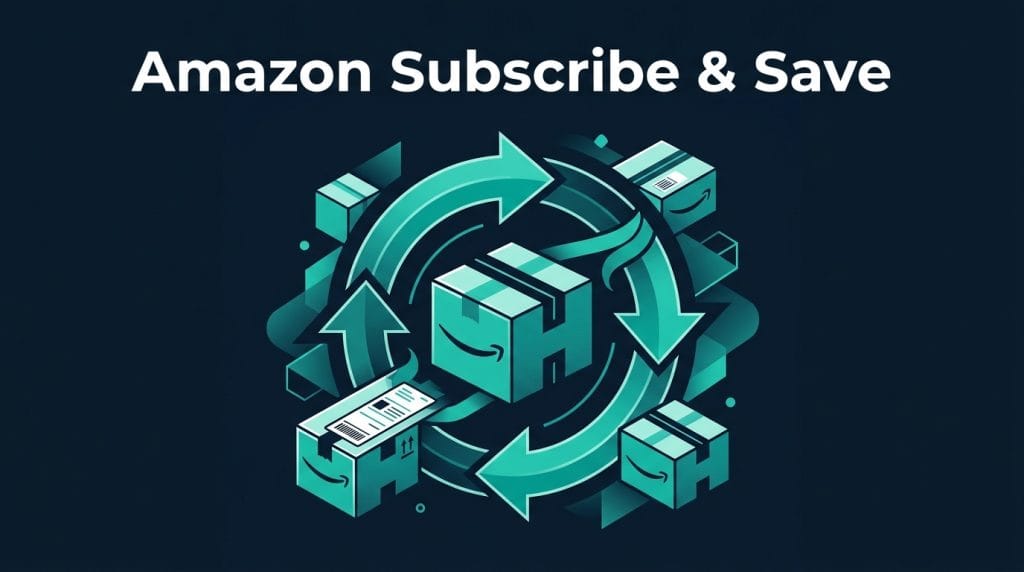
Amazon Subscribe & Save (S&S) is a program that lets customers sign up for automatic, recurring deliveries of eligible products at a discount. Customers can choose delivery frequencies ranging from every 2 weeks to every 6 months, and they receive a 5% discount by default. If they have 5 or more active subscriptions delivering in the same month, that discount increases to 15% on all eligible items in that delivery.
From the seller’s perspective, Subscribe & Save creates a stream of recurring orders without any additional marketing spend. Amazon handles the billing, reminder emails, and delivery scheduling. The seller simply needs to maintain consistent inventory to fulfill those orders reliably.
Products enrolled in Subscribe & Save also receive a prominent badge on their product detail pages, a visual trust signal that many shoppers actively look for, especially when buying replenishable goods. According to Amazon’s internal data, products with the S&S badge see higher conversion rates on average compared to non-enrolled products in the same category.
The Discount Structure: Who Pays?
This is the question that trips up many sellers: who funds the discount? The answer depends on your selling model:
- FBA Sellers (1P / Vendor Central): Amazon typically funds a portion of the discount. Sellers on Vendor Central often see Amazon absorb some discount cost depending on the category and negotiated terms.
- FBA Sellers (3P / Seller Central): You fund the discount yourself. The 5% (or 15%) comes directly out of your margin. Amazon does not subsidize it for third-party sellers in most cases.
- Seller-Funded Discounts: Sellers can optionally set a higher seller-funded discount (above the base 5%) to make their listing more competitive within Subscribe & Save search results.
Understanding who pays is critical before enrolling, especially for sellers with thin margins.
Who Benefits Most from Subscribe & Save
Not every product is a good candidate for Subscribe & Save. The program is best suited for a specific type of product and business model. Here’s how to assess whether it makes sense for your catalog.
Ideal Product Categories
Subscribe & Save performs best for products that customers buy repeatedly on a predictable schedule. The top-performing categories include:
- Grocery & Food: Coffee pods, protein powder, snacks, condiments
- Health & Beauty: Vitamins, supplements, skincare consumables, razors
- Baby: Diapers, formula, wipes, baby food
- Pet Supplies: Pet food, treats, flea prevention, supplements
- Household: Cleaning products, paper goods, laundry detergent, batteries
If your product falls outside these categories, or if it’s a one-time purchase like a kitchen appliance or a book, Subscribe & Save is unlikely to generate meaningful recurring revenue.
Business Models That Benefit Most
Beyond product type, certain business models extract the most value from S&S:
- Private label brands with healthy margins (40%+): You can absorb the 5 to 15% discount and still maintain profitability while building a loyal subscriber base.
- Brands with strong repeat purchase intent: If your product solves a recurring problem, subscriptions reinforce customer habits and reduce churn.
- Sellers competing in crowded niches: The S&S badge differentiates your listing and reduces the risk that a subscriber will switch to a competitor next month.
Building a base of S&S subscribers is one of the most effective ways to build repeat buyers on Amazon, it locks in demand and reduces your dependency on paid advertising to drive every sale.
Margin Impact: The Real Cost of Discounts
Let’s talk numbers, because this is where most sellers get surprised.
Assume your product sells at $29.99, your COGS is $6.00, and FBA fees total $7.50. Your gross profit per unit is approximately $16.49, a healthy ~55% gross margin.
Now apply Subscribe & Save discounts:
| Scenario | Sale Price | Discount | Net Revenue | Gross Profit | Margin |
|---|---|---|---|---|---|
| No S&S | $29.99 | 0% | $29.99 | $16.49 | 55% |
| S&S (5%) | $29.99 | 5% | $28.49 | $14.99 | 50% |
| S&S (15%) | $29.99 | 15% | $25.49 | $11.99 | 40% |
At the 5% tier, you give up about $1.50 per unit. At the 15% tier (when customers have 5+ subscriptions in a delivery), you’re giving up $4.50 per unit. For a product moving 300 units/month through subscriptions, the 15% scenario costs you $1,350/month in margin relative to full-price sales.
When the Math Works in Your Favor
The discount cost is justified when you factor in the reduction in Customer Acquisition Cost (CAC). According to research from Profitero, subscription customers have a 3x higher lifetime value than one-time buyers on Amazon. If you’re spending $8 to $15 per unit in PPC to acquire a one-time buyer, retaining that buyer through a free subscription mechanism is almost always more cost-efficient, even with the discount applied.
The key question: is your margin thick enough to absorb a 5 to 15% discount while still being profitable after FBA fees, COGS, and advertising? If yes, Subscribe & Save can meaningfully improve your unit economics by reducing your reliance on paid acquisition.
How to Enroll in Subscribe & Save
Enrolling in Subscribe & Save is done through Seller Central and is available to FBA sellers who meet Amazon’s eligibility criteria.
Eligibility Requirements
To qualify for Subscribe & Save, you must:
- Have a Professional selling account (individual accounts are not eligible)
- Maintain a seller feedback rating of 4.7 or above
- Have at least 5 reviews on your seller account
- Fulfill orders via FBA (Fulfillment by Amazon), Seller Fulfilled Prime (SFP) is not eligible
- Your products must be in an eligible category (most consumables qualify)
Step-by-Step Enrollment Process
- Log in to Seller Central and navigate to Inventory → Manage Subscribe & Save Products (or search “Subscribe and Save” in the search bar)
- Select eligible ASINs from your catalog, ASINs that aren’t eligible will be grayed out
- Set your seller-funded discount, the default is 0% additional (Amazon funds the base 5%), but you can add up to 10% more seller-funded discount to boost your S&S ranking
- Review and enroll, changes typically take 24 to 48 hours to reflect on your product detail pages
Once enrolled, your listing will display the Subscribe & Save badge and the “Save more with Subscribe & Save” callout in the buy box area. You can monitor your subscription metrics in the Subscribe & Save dashboard within Seller Central, which shows active subscribers, units on subscription, revenue, and cancellation rates.
Common Mistakes Sellers Make
Even sellers with great products get burned by Subscribe & Save when they make avoidable errors. Here are the most common pitfalls:
1. Enrolling Products with Thin Margins
If your net margin after FBA fees and COGS is below 25%, a 5 to 15% S&S discount can push you into unprofitable territory at scale. Run the numbers before enrolling, don’t assume the volume will compensate for the margin compression.
2. Running Out of Inventory
This is one of the most damaging mistakes you can make. When you run out of stock, Amazon cancels pending subscriptions, and many customers don’t resubscribe. Going out of stock even once can wipe out months of subscriber buildup. Prioritize inventory planning for your enrolled SKUs above all others.
3. Setting Too-High Seller-Funded Discounts
Some sellers try to dominate the S&S results by offering 10 to 15% additional seller-funded discounts. This can win short-term subscribers but devastates margins. A product with 30% margins offering 15% additional discount plus Amazon’s 5% base = 20% total discount, leaving you with only 10% net margin before advertising costs.
4. Ignoring Price Fluctuations
If you raise your base price, subscribers locked in at a lower price point may churn when they notice the change in their next delivery. Conversely, lowering your price can create a flood of new subscriptions that stresses inventory. Price stability is critical for healthy S&S management.
5. Not Tracking Subscription Metrics
Amazon provides rich S&S reporting in Seller Central, but many sellers never look at it. Track your subscriber count, active units, cancellation rate, and revenue contribution monthly. A rising cancellation rate is an early warning sign that something is wrong (product quality, pricing, delivery delays).
Tips for Maximizing Subscribe & Save Revenue
Beyond avoiding mistakes, there are proactive strategies that help sellers extract maximum value from the program.
Bundle Complementary Products
If you sell a range of consumables, say, a protein powder and a shaker bottle, enrolling complementary products helps customers build their “5 subscription” bundle, which triggers the 15% discount tier. This increases their perceived savings and reduces churn across your whole catalog.
Combine S&S with Brand Building
Subscribe & Save works best as part of a broader brand loyalty strategy. Subscribers who have a positive emotional connection with your brand are far less likely to cancel when a competitor runs a promotion. Consider pairing S&S enrollment with Amazon’s creator programs, as explored in our guide on Amazon Creator Connections best practices for building brand awareness, to strengthen your brand presence and give subscribers more reasons to stay.
Use A+ Content to Support Retention
Your product detail page is the first thing a new subscriber sees. Invest in rich A+ content that reinforces why your product is the best choice for long-term use, this reduces cancellation rates and helps convert first-time buyers into subscribers. Strong brand loyalty strategies on Amazon compound well with S&S enrollment.
Monitor and Respond to Reviews
Subscribers are more likely to leave reviews, and more likely to cancel if product quality drops. Monitor your review velocity and average rating monthly. If you see a dip, investigate quickly. Subscription customers are more vocal about quality issues because they’re receiving the product repeatedly.
Work with an Expert for Complex Catalogs
If you manage a large catalog or multiple brands, optimizing Subscribe & Save across dozens of ASINs, including pricing, inventory buffers, and discount levels, becomes a significant operational challenge. Working with an Amazon brand management agency can help you build systems to track S&S performance at scale and make data-driven decisions about which ASINs to enroll, adjust, or remove.
Frequently Asked Questions
Is Amazon Subscribe & Save worth it for sellers?
Subscribe & Save is worth it for sellers with consumable products, healthy margins (40%+), and consistent inventory. It reduces customer acquisition costs and builds predictable recurring revenue. Sellers with thin margins or inventory challenges should calculate the discount impact carefully before enrolling.
How much does Subscribe & Save cost the seller?
For third-party sellers on Seller Central, the 5% base discount is seller-funded. If a customer has 5+ subscriptions delivering together, the discount rises to 15%, also seller-funded. An optional additional seller-funded discount (up to 10% more) can be added to improve S&S search ranking.
Can I remove a product from Subscribe & Save?
Yes. You can unenroll any ASIN from Subscribe & Save via Seller Central. However, existing subscriber orders will still be processed at the discounted rate. New subscribers won’t be able to enroll once you remove the ASIN from the program.
What happens to subscriptions when I run out of stock?
When your FBA inventory runs out, Amazon cancels upcoming Subscribe & Save orders for that ASIN and notifies subscribers. Many customers do not resubscribe when stock is restored, making stockouts extremely costly for S&S-enrolled products.
Does Subscribe & Save improve Amazon ranking?
Indirectly, yes. Subscription orders contribute to your BSR (Best Seller Rank) just like regular orders. Consistent monthly subscription volume helps maintain and improve your BSR, which in turn improves organic visibility, creating a positive feedback loop between subscriptions and search ranking.
Conclusion: Is Amazon Subscribe & Save Worth It for Sellers?
Amazon Subscribe & Save is worth it for sellers who qualify, but it’s not a free revenue stream. The program rewards sellers who have the right products (consumables with repeat purchase intent), the right margins (typically 40%+ gross), and the operational discipline to maintain consistent inventory.
When those conditions are met, S&S can shift 10 to 30% of your revenue onto autopilot, reduce your dependence on PPC advertising, and give you a base of loyal customers who are harder for competitors to poach. The brands that use it most effectively treat it not as a discount tactic, but as a retention and loyalty tool built into their broader Amazon brand strategy.
If you’re evaluating Subscribe & Save for your brand or want help designing an enrollment strategy that protects your margins, our Amazon brand management team works with sellers across categories to build sustainable, subscription-driven revenue models. Get in touch to see how we can help.
Further reading: build repeat buyers on Amazon | Amazon pricing strategy | Amazon PPC management