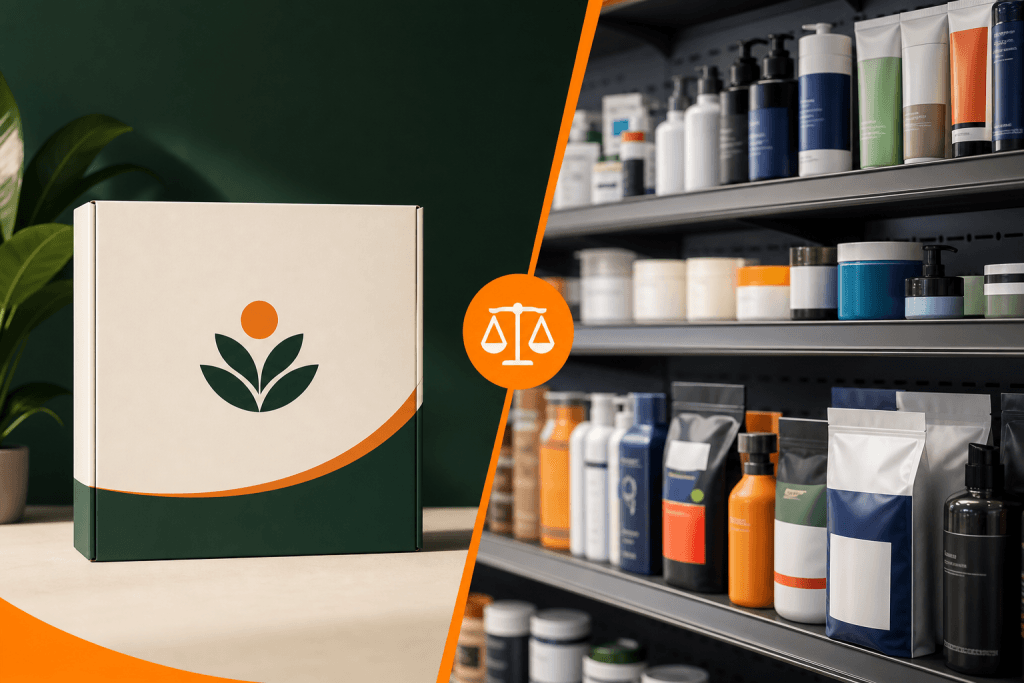
Deciding between Amazon private label vs wholesale is one of the first major choices every new Amazon seller faces. Both business models can generate serious revenue, but they work in completely different ways and carry very different risk profiles, startup costs, and long-term upside.
This guide breaks down exactly how each model works, what it realistically costs to start, the margins you can expect, and, most importantly, which one is right for you based on your goals and budget. If you are leaning toward building a real brand with lasting equity, you will want to read all the way through.
TL;DR: Private label offers higher margins, full brand control, and long-term asset value, but requires a larger upfront investment and more time to launch. Wholesale is faster to start and lower risk per SKU, but margins are thinner and you compete directly with other sellers on the same listing. For sellers focused on building a business they own, private label wins.
Table of Contents
- What Is Amazon Private Label?
- What Is Amazon Wholesale?
- Private Label vs Wholesale: Side-by-Side Comparison
- Startup Costs: What You Actually Need to Begin
- Profit Margins: What Each Model Actually Returns
- Pros and Cons of Each Model
- Who Each Model Is Best For
- Hybrid Strategies: Can You Do Both?
- Frequently Asked Questions
- Final Verdict
What Is Amazon Private Label?
Private label means you source a product from a manufacturer (usually in China or another low-cost country), brand it with your own logo, packaging, and product identity, and sell it as your own. You own the brand. You control the listing. Nobody else can legally sell on your ASIN without your permission.
The private label model is how brands like Anker, HyperX, and thousands of mid-market Amazon success stories were built. You are not reselling someone else’s product. You are creating an asset that grows in value the more you invest in it.
Most private label sellers use Fulfillment by Amazon (FBA) to handle warehousing and shipping, which means Amazon stores your inventory and ships orders for you in exchange for a monthly storage fee and per-unit fulfillment fee. This keeps operations lean, especially for early-stage brands.
Key characteristics of private label on Amazon:
- You register your own brand via Amazon Brand Registry
- You are the only seller on your listing (no buy box competition from other sellers)
- You control pricing, imagery, A+ Content, and the full customer experience
- Products are manufactured to your specifications, giving room for differentiation
- You build equity in a brand that can be sold or scaled
What Is Amazon Wholesale?
Amazon wholesale means buying existing branded products in bulk from manufacturers, distributors, or brand owners at wholesale prices, then reselling them on Amazon at retail. You are not creating a brand. You are finding profitable arbitrage between the wholesale price you pay and the price Amazon customers will pay.
Wholesale sellers typically list on existing product listings alongside other resellers. This means you are competing on price and buy box share, not brand identity. Your goal is to maintain a healthy buy box percentage while keeping your cost of goods low enough that the margin is worth it.
Key characteristics of Amazon wholesale:
- You source established, already-proven products (lower product risk)
- You list on existing ASINs (fast time to market, no listing creation needed)
- You compete with other wholesale sellers and sometimes the brand itself
- No brand ownership, so no brand equity builds over time
- Volume and supplier relationships are the main competitive moat
Private Label vs Wholesale: Side-by-Side Comparison
| Factor | Private Label | Wholesale |
|---|---|---|
| Startup Cost | $3,000 to $10,000+ | $1,500 to $5,000 |
| Typical Net Margin | 25% to 45% | 8% to 20% |
| Brand Control | Full ownership | None |
| Competition | Low (you own the listing) | High (shared listing, buy box battle) |
| Scalability | High (brand equity compounds) | Moderate (limited by supplier and margin) |
| Time to Launch | 3 to 6 months | 2 to 8 weeks |
Startup Costs: What You Actually Need to Begin
Private Label Startup Costs
Building a private label brand on Amazon requires more upfront capital than wholesale, but that investment buys you something wholesale can never offer: ownership.
A realistic private label launch budget breaks down roughly as follows:
- Product development and first order (500 to 1,000 units): $1,500 to $5,000, depending on product complexity and MOQ
- Shipping and import duties: $300 to $800 for a standard sea freight order
- Branding and packaging design: $300 to $1,000 for professional logo and packaging
- Amazon launch and PPC budget: $500 to $2,000 for initial advertising to build rank and reviews
- Product photography: $300 to $700 for main images, lifestyle shots, and infographics
- Amazon Brand Registry and trademark: $250 to $500 for USPTO filing fees (recommended, not required at launch)
Total realistic minimum: $3,000 to $5,000 for a lean launch. Most successful private label sellers invest $7,000 to $15,000 in their first product to give it a real chance. Underfunding a launch is one of the most common mistakes new sellers make.
Wholesale Startup Costs
Wholesale has a lower entry cost because you are buying existing products at established price points, not building anything from scratch.
- Initial inventory purchase: $1,000 to $3,000 for a first bulk order across a handful of SKUs
- Amazon Professional Seller account: $39.99/month
- Prep and shipping to FBA: $0.50 to $1.50 per unit depending on product size
- Wholesale analysis tools (Tactical Arbitrage, Jungle Scout, Helium 10): $50 to $150/month
Total realistic minimum: $1,500 to $3,000. You can start smaller by testing just a few SKUs, which is one reason wholesale appeals to sellers who want to learn the platform before committing heavily.
Profit Margins: What Each Model Actually Returns
Private Label Margins
Private label margins vary by category, but the average net margin for established private label brands on Amazon runs between 25% and 45% after accounting for COGS, FBA fees, PPC spend, and platform fees. Some high-performing brands hit 50%+ net margins once advertising is optimized and reviews drive organic sales.
According to Jungle Scout’s 2024 State of the Amazon Seller report, the majority of private label sellers who have been selling for more than two years earn net profit margins above 20%. The more differentiated your product, the less you spend on PPC to compete, which is the single biggest driver of margin improvement.
A realistic example: a private label product with a $12 COGS (product plus freight), sold at $34.99, with $7.50 in FBA fees and $4 in average PPC spend per unit, yields roughly $11.49 in net profit per unit, a 33% net margin.
Wholesale Margins
Wholesale margins are tighter. Because you are buying established products at standard wholesale pricing (typically 50% of MSRP), and then paying FBA fees, Amazon’s referral fee (8% to 15% depending on category), and shipping, the net margin typically lands between 8% and 20%.
The math gets harder when you factor in that brand owners sometimes sell directly on Amazon, competing with their own authorized resellers. When that happens, you are fighting for buy box share against someone with structurally lower COGS than you.
Successful wholesale sellers compensate with volume. If you can move 500 units per month at 12% net on a $30 product, that is $1,800 in monthly profit per SKU. Scale to 20 profitable SKUs and the model works. But it requires constant supplier relationship management and ongoing product sourcing, which is a business in itself.
Pros and Cons of Each Model
Private Label: Pros
- You own the brand. That brand has resale value, licensing potential, and real equity
- No buy box competition. You set the price and nobody undercuts you on your own listing
- Higher margins. Once a product gains traction, margins compound as PPC efficiency improves
- Full creative control. Packaging, imagery, listing copy, A+ Content, and brand story are all yours
- Defensible position. Registered trademarks and Amazon Brand Registry give you IP protection
Private Label: Cons
- Higher upfront investment. Minimum $3,000 to start, typically $7,000 to $15,000 for a strong launch
- Longer time to market. Product development, sampling, and production take 60 to 120 days
- Product risk. If the product flops, you have unsellable inventory and sunk costs
- Listing building required. You start with zero reviews and need a launch strategy to build social proof
Wholesale: Pros
- Lower barrier to entry. Start for $1,500 to $3,000 and learn the platform faster
- Proven products. You are selling items with existing demand, eliminating product-market fit risk
- Faster cash cycles. No waiting months for a product to launch, just buy and list
- Fewer operational variables. No product development, sampling, or manufacturing to manage
Wholesale: Cons
- No brand ownership. You are building Amazon’s business, not yours
- Constant buy box pressure. Competing sellers and sometimes the brand itself will undercut you
- Thin margins. 8% to 20% net leaves little room for error or rising costs
- Supplier dependency. Lose a supplier relationship or get price-squeezed and the SKU stops working
- Scalability ceiling. Growth requires adding more SKUs and more supplier relationships, not building something compounding
Who Each Model Is Best For
Private Label Is Best For:
- Sellers who want to build a long-term business they can eventually sell (Amazon FBA brands sell for 2x to 5x annual net profit)
- Entrepreneurs with $5,000+ to invest in their first product and 3 to 6 months of runway before expecting revenue
- Anyone with a clear product idea, niche expertise, or existing audience they can leverage at launch
- Sellers interested in working with a full-service Amazon agency to build brand infrastructure professionally
Wholesale Is Best For:
- New sellers who want to learn how Amazon works with lower initial risk
- Sellers with strong existing supplier relationships or experience in a specific product category
- Operators who enjoy high-volume, process-driven businesses rather than brand building
- Anyone who wants faster cash flow and is willing to trade brand equity for speed
Hybrid Strategies: Can You Do Both?
Yes, and some of the most successful Amazon sellers run both models simultaneously. The most common hybrid approach is to start with wholesale to generate cash flow and learn the platform, then use those profits to fund private label product development.
Another hybrid variant is “private label wholesale,” where you source generic products from manufacturers and brand them, but in categories with less competition than typical consumer goods. This gives you the brand control of private label with slightly faster sourcing timelines.
A third approach is to use wholesale as a product testing mechanism: identify which wholesale products sell well in a category, then develop a private label version with better features, packaging, or a lower price point. The wholesale data essentially tells you the market is there before you invest in building your own brand.
The important caveat is that running both models simultaneously doubles the operational complexity. For most sellers starting out, picking one model and executing it well beats splitting attention across both. If you are focused on brand building, a structured Amazon product launch process will compound returns faster than adding wholesale SKUs on the side.
Frequently Asked Questions
Is Amazon private label or wholesale more profitable?
Private label is more profitable per unit, with typical net margins of 25% to 45% compared to 8% to 20% for wholesale. However, wholesale can generate strong total profit through volume. For long-term business value, private label wins because brand equity compounds over time and can be sold at a multiple of earnings.
How much money do I need to start Amazon private label vs wholesale?
Wholesale can be started with as little as $1,500 to $3,000. Private label requires a minimum of $3,000 to $5,000 for a lean launch, but most successful sellers invest $7,000 to $15,000 to give their first product a realistic chance with proper inventory depth, photography, and advertising.
Which Amazon selling model is better for beginners?
Wholesale has a lower learning curve and lower capital at risk, making it more forgiving for beginners. However, beginners who can afford the upfront investment and want to build something lasting tend to see better long-term outcomes with private label, especially when working with experienced Amazon advisors.
Can Amazon private label sellers be undercut by competitors?
Not on their own listing. When you own a private label brand registered with Amazon Brand Registry, you control your product listing exclusively. Competitors cannot list on your ASIN. This is the fundamental advantage over wholesale, where multiple sellers share the same product listing and compete for the buy box.
What is the difference between private label and reselling on Amazon?
Reselling (retail arbitrage or wholesale) means buying existing branded products and listing them for sale on Amazon without creating your own brand. Private label means sourcing unbranded or custom products and selling them under your own brand name. Private label sellers own their listing; resellers share listings with other sellers.
Final Verdict: Which Model Should You Choose?
For most sellers reading this, the answer depends on a single question: are you trying to build a business you own, or generate cash flow while learning the platform?
If you want to build something with real equity, the ability to scale with brand investment, and eventually sell at a 3x to 5x multiple, private label is the right choice. It takes longer, costs more upfront, and demands more strategic thinking, but the payoff is an asset that compounds with every review, every rank improvement, and every dollar of PPC optimization.
If you want to move faster, keep risk low while you learn, or operate a volume-driven reselling business, wholesale has a real place. Just go in knowing the ceiling is lower and the model does not generate the brand equity that private label does.
Brands that have crossed $1M in Amazon revenue and want to build past that threshold almost universally come from the private label side. The operational infrastructure needed to scale a private label brand is more complex, but it is also more defensible and more valuable.
If you are ready to build a real brand on Amazon and want experienced help doing it right, the team at Enso Brands works exclusively with private label sellers. Learn more about our full-service Amazon agency and find out how we help sellers launch, scale, and optimize their brands.